
Bournemouth, Christchurch and Poole Council appeal evidence
Refused for inappropriate Green Belt development in Bournemouth, Christchurch and Poole?
See how local inspectors assessed Green Belt harm and which building features helped an allowed extension.
Recently refused?
Create a free account for a private planning workspace.
No payment at signup. Refusal-review ordering may not be open.
- Matched locally
- 6 of 239
- eligible decision families
- Allowed
- 2
- matched appeal records
- Dismissed
- 4
- matched appeal records
- Householder
- 6
- of 6 matched records
AI-assisted. Cited sources and wording were checked before publication. Based on 5 source-linked examples shown below. Review method and limits.
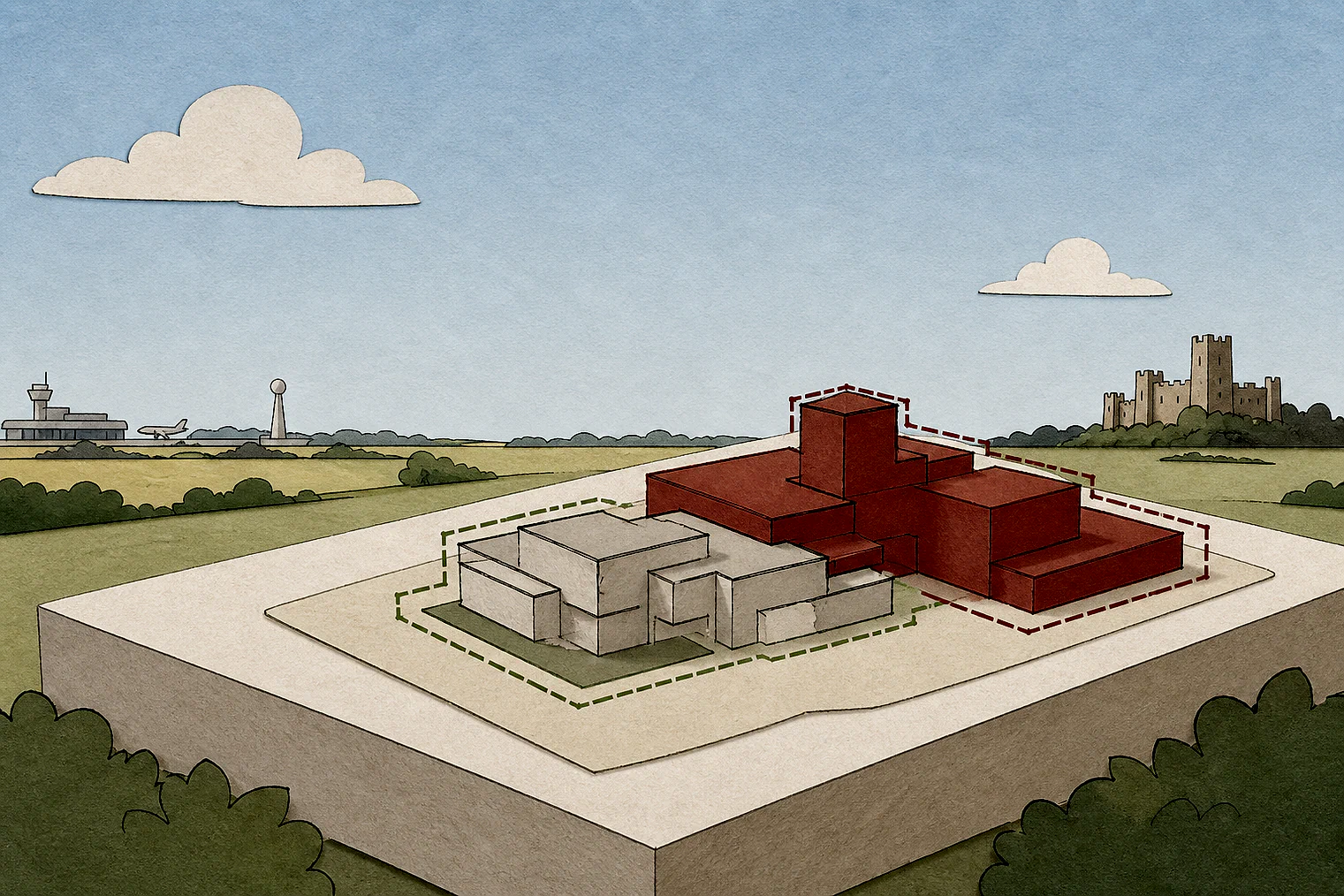
Planning Data area point: Bournemouth, Christchurch and Poole LPA (50.746989, −1.88326). This is the published representative point for the authority boundary, not a town hall, camera position or appeal site.
Bournemouth, Christchurch and Poole Council appeal findings
Bournemouth, Christchurch and Poole additions and Green Belt openness
The selected examples omit an allowed decision from the matched local set, so that decision’s reasoning is unavailable.
Counted against appeals
Where additions harmed Green Belt openness
Width and depth reduced open space
Wider and deeper extensions reduced boundary space and enlarged the building footprint, eroding openness.
Planting left winter views
Vegetation may limit summer views, but parts of the additions were still visible from the road and nearby open land in winter.
Fallback schemes needed real prospects
The unconfirmed garden building carried little weight, while the possible permitted extension would cause less Green Belt harm.
Helped or needed
What kept the extension acceptable
Cumulative size remained proportionate
With existing extensions considered, the proposal reached the acceptable upper limit but did not exceed it.
No harmful effect on openness
The extension would not visibly or harmfully alter the dwelling’s form or compromise Green Belt openness.
Your refusal notice
Check these details
- Does the refusal identify lost space between your building and its boundary?
- Could added width or depth be seen from roads or nearby open land?
- After existing extensions, does your proposal still look proportionate?
The selected Bournemouth, Christchurch and Poole examples do not show every Green Belt site layout. These decisions do not predict another result.
Appeal evidence examples
Compare allowed and dismissed appeal reasoning
Each example separates the development, the Inspector-stated issue that selected it, and the reasoning from the decision. Compare the facts as well as the outcome: these examples do not predict how a different proposal would be decided.
Allowed appeal examples
1 example
9 February 2022 · Allowed
Development described in the decision
a two-storey rear/side extension to form an orangery on the ground floor with enlargement of existing bedrooms on the first floor, also proposal for a basement cellar.
Issue identified by the Inspector
The main issues are: • Whether the proposal would be inappropriate development in the Green Belt having regard to the National Planning Policy Framework and any relevant development plan policies, including any effects on openness; and • If the development is inappropriate, whether the harm by reason of inappropriateness, and any other harm, would be clearly outweighed by other considerations so as to amount to the very special circumstances required to justify the proposal.
Paragraph 2 · Source page 1
Reasoning from the decision
In my view, considered cumulatively with the existing extensions to the original, generously-scaled dwelling, the proposal would take the dwelling to the upper limits of an acceptable size, maintaining its proportionality, but would not exceed that extent. The extension would not visibly or harmfully alter the form of the dwelling and would not compromise the Green Belt’s openness or permanence. The design and materials of the extension would also be in keeping with the host dwelling.
Paragraph 11 · Source pages 2, 3
Dismissed appeal examples
4 examples
16 July 2021 · Dismissed
Development described in the decision
to erect a 2 storey side extension.
Issue identified by the Inspector
The main issues in this appeal are: • Whether the proposed development is inappropriate development within the Green Belt, including its effect on the openness of the Green Belt, having regard to the National Planning Policy Framework (the Framework) and any relevant development plan policies; • The effect of the proposed development on the character and appearance of the host building; and • If the development is inappropriate, whether the harm by reason of inappropriateness, and any other harm, is clearly outweighed by other considerations so as to amount to the very special circumstances necessary to justify the development.
Paragraph 2 · Source page 1
Reasoning from the decision
In summary of the above, the appeal scheme would not accord with any of the exceptions to inappropriate development within the Green Belt as provided under paragraph 145 of the Framework. The proposal would be harmful to the openness of the Green Belt and would conflict with the purposes of the Green Belt. Therefore, I conclude that the proposed development would be inappropriate development in the Green Belt having regard to the Framework and, consequently, would be contrary to Policy PP2 of the Local Plan which seeks to protect the openness of the Green Belt from inappropriate development in accordance with national planning policy.
Paragraph 11 · Source pages 2, 3
12 December 2025 · Dismissed
Development described in the decision
erection of an ancillary outbuilding alongside a pre-existing boundary wall.
Issue identified by the Inspector
Accordingly, the main issues in this appeal are: • whether the development is inappropriate development in the Green Belt as defined in the Framework and relevant development plan policies; • the effect of the development on the openness and purposes of the Green Belt; • the effect of the development on the character and appearance of the area; and • whether any harm by reason of inappropriateness, and any other harm, would be clearly outweighed by other considerations, so as to amount to the very special circumstances required to justify the development.
Paragraph 11 · Source page 3
Reasoning from the decision
I have found that the development is inappropriate development in the Green Belt which results in a moderate reduction in openness. The Framework indicates that substantial weight should be given to any harm to the Green Belt, including harm to its openness. It is also clear that the harm to the Green Belt by reason of inappropriateness, and any other harm resulting from the development, must be clearly outweighed by other considerations for planning permission to be granted.
Paragraph 23 · Source page 5
17 January 2025 · Dismissed
Development described in the decision
single storey rear extension; single storey side extension; first floor dormer extension; car port; demolition of garage and associated works.
Issue identified by the Inspector
The main issues are: • Whether the proposal would be inappropriate development in the Green Belt having regard to the Framework and any relevant development plan policies; • The effect of the proposal on the openness of the Green Belt; and 1 Holborn Studios Ltd v The Council of the London Borough of Hackney [2017] EWHC 2823 (Admin) • Whether any harm by reason of inappropriateness, and any other harm, would be clearly outweighed by other considerations, so as to amount to the very special circumstances required to justify the proposal.
Paragraph 4 · Source pages 1, 2
Reasoning from the decision
For these reasons, the appeal proposal would not fall within Paragraph 154c) of the Framework and would be inappropriate development in the Green Belt which is harmful by definition. It would conflict with PLP policy PP2 which seeks to manage the Green Belt consistent with national policy. Effect on openness 11 The national Planning Practice Guidance indicates that openness is capable of having both spatial and visual aspects. The increase in the width of the dwelling arising from the extensions would reduce the space between it and the site boundary and reduce the openness of the site as a result. Similarly, the projection of the proposed rear extension beyond the rear wall of both the original and existing dwelling would expand the footprint of the house which would further erode the openness of the Green Belt. Even though on a very small scale, this would not be consistent with the purpose of the Green Belt to check the unrestricted sprawl of large built up areas. 12 The increase in the size of the building would be seen from the road. The side extension and dormer would be visible through the site entrance and gaps in the vegetation along the road frontage. During the winter, when the site visit was made, the eastern side of the rear extension would also be partially visible from the road across the open land adjacent to its boundary. Whilst the vegetation would be likely to limit views during the summer this would not negate the adverse impact of the development on the openness of the Green Belt. 13 As a consequence, notwithstanding the other houses in the vicinity, the increase in the scale of building on the site and the loss of space between the house and its side boundaries would cause a moderate level of harm to the Green Belt in conflict with paragraph 142 of the Framework. Whether very special circumstances exist 14 The Council confirmed in June 2023 that prior approval2 is not required for a single storey rear extension which would extend beyond the rear wall of the original detached dwelling by 5.3m with a maximum height of 3m. If built, the plans indicate that the 18sqm addition would square off the rear of the existing building which is currently ‘L’ shaped as a result of the previous extension. It would not be as wide or as deep as the proposed extension and, as a result, would have less impact on the openness of the Green Belt than the proposal. 15 Reference is also made by the appellant to an application for a Lawful Development Certificate (LDC) for a proposed garden building to the rear of the house. The evidence indicates that this would be a substantial free standing building of approximately 32sqm floor area. This application remains to be determined. 16 It is suggested that the permitted development extension and proposed garden building provide a fallback position and their size and floor space should be offset against the appeal proposals. This is because, together with the garage to be demolished, their combined floor space would be less than the appeal proposal. However, the status of the proposed garden building is not confirmed and I have not seen any evidence to suggest that there is a real prospect that either development might take place. 2 GPDO/23/00009/GPD 17 There is a theoretical possibility that the extension proposed as permitted development could be carried out and would occupy part of the same site as the appeal proposal. It therefore carries weight in favour of the proposal as it provides a potential fallback position against which the appeal proposal should be assessed. However, as it would have less impact on the openness of the Green Belt than the proposed additions, that weight is limited. 18 If the LDC is granted for the garden building, it would still be physically capable of being carried out independently of the appeal proposal thereby negating any fallback position. This could result in both the extension and the garden building being constructed which would compound the harm to the openness of the Green Belt. 19 I have considered whether a planning condition to prevent permitted development rights being used to construct the garden building could be imposed if I were minded to allow the appeal. However, a condition removing those rights would only take effect once the planning permission is implemented. It would therefore not necessarily prevent the garden building being constructed. As a result, and given that the prospects of the garden building being built are unclear, that proposed building has little weight. Planning balance and conclusion 20 The proposal would constitute inappropriate development in the Green Belt resulting in moderate harm to its openness. Inappropriate development is by definition harmful to the Green Belt. In accordance with the Framework, I give substantial weight to the harm to the Green Belt and its openness. 21 [name] have concluded above, the proposed permitted development extension and proposed garden room carry limited and little weight, respectively. I therefore find that the other considerations in this case do not clearly outweigh the harm arising from the appeal scheme that I have identified. Consequently, the very special circumstances necessary to justify the development do not exist. 22 The proposal conflicts with the development plan and the material considerations do not indicate that the appeal should be decided other than in accordance with it. For the reasons given above the appeal should be dismissed.
Paragraph 11 · Source pages 2, 3, 4
13 January 2025 · Dismissed
Development described in the decision
Garage with annexe at first floor.
Issue identified by the Inspector
The main issues in this case are: • Whether the proposal would be inappropriate development in the Green Belt having regard to the National Planning Policy Framework and any relevant development plan policies; • The effect of the proposal on the openness of the Green Belt; and • Whether any harm by reason of inappropriateness, and any other harm, would be clearly outweighed by other considerations, so as to amount to the very special circumstances required to justify the proposal.
Paragraph 2 · Source page 1
Reasoning from the decision
The appellant asserts that the development would not conflict with the purposes of the Green Belt. However, even if I accept this, for the reasons outlined, the proposal would be in inappropriate development in the Green Belt and there would be harm to the openness of the Green Belt. Very special circumstances to justify inappropriate development will not exist unless the potential harm to the Green Belt by reason of inappropriateness, and any other harm, is clearly outweighed by other considerations.
Paragraph 17 · Source page 3