
Buckinghamshire Council appeal evidence
Refused over inappropriate Green Belt development in Buckinghamshire?
Learn which Green Belt harms inspectors found unresolved and what helped in the selected allowed examples.
Recently refused?
Create a free account for a private planning workspace.
No payment at signup. Refusal-review ordering may not be open.
- Matched locally
- 7 of 35
- eligible decision families
- Allowed
- 4
- matched appeal records
- Dismissed
- 3
- matched appeal records
- Householder
- 3
- of 7 matched records
AI-assisted. Cited sources and wording were checked before publication. Based on 5 source-linked examples shown below. Review method and limits.
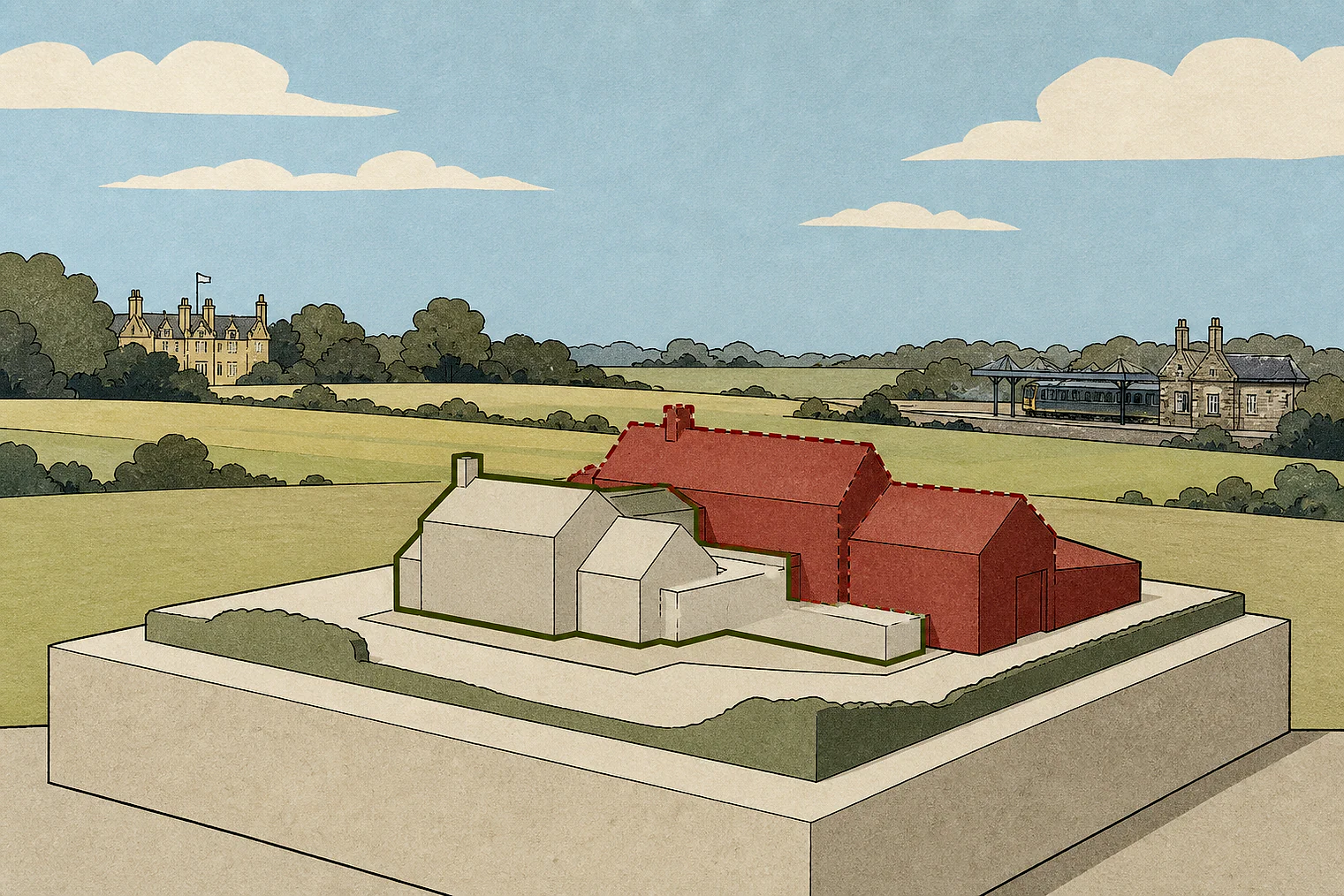
Planning Data area point: Buckinghamshire LPA (51.785348, −0.812127). This is the published representative point for the authority boundary, not a town hall, camera position or appeal site.
Buckinghamshire Council appeal findings
Green Belt harm, benefits and openness
The selected examples lean more towards allowed appeals than the matched local set. An allowed open-countryside extract gives no reason for its allowance.
Counted against appeals
Benefits did not outweigh Green Belt harm
Very special circumstances were absent
The Inspector concluded that the proposal’s benefits did not clearly outweigh Green Belt and other identified harm, so the necessary very special circumstances were absent.
Helped or needed
Features in allowed Green Belt examples
Framework compliance carried greater weight
In an outline housing appeal, the Inspector gave greater weight to Framework compliance than conflict with a local Green Belt policy that was not fully consistent with it.
Openness loss stayed modest
A larger, taller replacement outbuilding would fill a gap, but the Inspector found the reduction in openness modest.
Measured outbuilding limits were met
A double garage/store met the stated height and curtilage conditions, with its stated volume below the policy threshold.
Your refusal notice
Check these details
- Does the refusal identify every harm your proposal’s benefits must outweigh?
- Does a larger footprint, extra height or filled building gap reduce openness?
- Can you show it meets applicable Green Belt outbuilding limits?
The selected examples give only a conclusion for the dismissed appeal, not the separate harms considered. These decisions do not predict another result.
Appeal evidence examples
Compare allowed and dismissed appeal reasoning
Each example separates the development, the Inspector-stated issue that selected it, and the reasoning from the decision. Compare the facts as well as the outcome: these examples do not predict how a different proposal would be decided.
Allowed appeal examples
4 examples
10 June 2026 · Allowed
Development described in the decision
described as ‘Outline application with all matters reserved except for access for the demolition of existing structures and the erection of up to 18 dwellings and associated infrastructure and landscaping’.
Issue identified by the Inspector
The main issue is whether the proposal is inappropriate development in the Green Belt having regard to the National Planning Policy Framework (the Framework) and any relevant development plan policies.
Paragraph 3 · Source page 1
Reasoning from the decision
The proposal would fail to accord with Policy GB2 of the LP as it would not constitute one of the exceptions to inappropriate development listed therein. However, given that Policy GB2 is not fully consistent with the approach of the Framework in relation to the Green Belt, I attribute greater weight to the compliance with the Framework in this case, which would outweigh this conflict.
Paragraph 22 · Source page 5
26 June 2026 · Allowed
Development described in the decision
detached outbuilding to replace two existing outbuildings.
Issue identified by the Inspector
The main issues are: i) whether the proposed development would be inappropriate development in the Green Belt having regard to the National Planning Policy Framework (the Framework) and development plan policies including the effect on the openness of the Green Belt; ii) the effect of the proposed development on the Chilterns National Landscape; and iii) if the proposed development would be inappropriate development, whether the harm by reason of inappropriateness, and any other harm, is clearly outweighed by other considerations, so as to amount to very special circumstances necessary to justify it.
Paragraph 3 · Source pages 1, 2
Reasoning from the decision
Openness is one of the key characteristics of the Green Belt which has both a visual and spatial aspect. The proposal would replace two outbuildings with one single building, therefore the gap between the two buildings would be replaced with built form. The proposed outbuilding would also cover a larger footprint and would be slightly taller than the existing outbuildings. This would amount to a spatial reduction in Green Belt openness. Furthermore, there would also be a visual effect on openness as the increased scale of the proposed outbuilding would be discernible to a limited extent from the appeal site and open countryside adjoining the appeal site. However, given the relative scale of the proposal compared to the existing buildings, the reduction in openness would be modest. Furthermore, I note that the Council finds that the reduction in openness would be limited and localised.
Paragraph 9 · Source page 3
16 June 2026 · Allowed
Development described in the decision
erection of single storey double garage/store.
Issue identified by the Inspector
The main issues in the appeal are: • Whether the proposal would be inappropriate development in the Green Belt having regard to the Framework and any relevant development plan policies; • The effect of the proposed development on the openness of the Green Belt; • The effect of the proposed development on the character and appearance of the host dwelling and the local area; • The effect of the proposed development on the character and appearance of the Chilterns National Landscape (National Landscape); and • The effect of the proposed development on the living conditions of the occupiers of ‘[name] with regard to outlook.
Paragraph 6 · Source page 2
Reasoning from the decision
Part 2 of Policy DM43 of the Local Plan provides additional rules regarding residential outbuildings in the Green Belt. It states that outside identified built up villages, any increase in the volume of residential outbuildings will only be considered appropriate when they meet all of the conditions provided. The appeal proposal would meet the height criteria set out in d) and e) of the policy and less than 50% of the curtilage outside of the dwelling would be occupied by outbuildings as set out in c). The appellant has indicated that the volume of the outbuilding would be circa 96 m3 which is below the threshold of 140m3 set out under condition b).
Paragraph 10 · Source page 2
2 June 2026 · Allowed
Development described in the decision
for phased development of a minimum of 1 and a maximum of 9 self- build dwellings.
Issue identified by the Inspector
The main issues are whether the site is suitable for residential development, having regard to its location, land use and the amount of development proposed, with particular consideration as to: • Whether the appeal site is grey belt and whether the proposal would be inappropriate development in the Green Belt having regard to the relevant development plan policies and the National Planning Policy Framework (the Framework), including the effect of the proposal on the openness and purposes of the Green Belt; and • Whether the location is suitable having regard to the spatial strategy in the
Paragraph 4 · Source page 1
Reasoning from the decision
Development within the Green Belt is controlled by Policy GB2 of the CDLP, where under Policy GB2(d), limited infilling as defined in Policy GB4, is allowed within settlement areas identified in Policy GB5 and the accompanying [name], of which [site address] is one such area. However, the application site is not within the areas of the village identified on the [name], where limited infilling under Policy GB5 would be acceptable. It therefore lies in open countryside within the Metropolitan Green Belt.
Paragraph 8 · Source page 2
Dismissed appeal examples
1 example
26 June 2026 · Dismissed
Development described in the decision
erection of 5no detached residential dwellings and associated works.
Issue identified by the Inspector
The main issues are:- - whether the development would be in a suitable location having regard to accessibility, development plan policies and the National Planning Policy Framework (the Framework); - the effect of the development on the character and appearance of the area, including whether it would conserve or enhance the natural, scenic and landscape beauty of the Chilterns National Landscape (the NL); - whether the proposal would be inappropriate development in the Green Belt; - the effect on openness; - whether the development would be served by a suitable surface water drainage scheme; - whether it would represent a suitable density of development and would provide an acceptable mix of dwellings; and - if the scheme would constitute inappropriate development in the Green Belt, whether the harm by reason of inappropriateness and any other harm is clearly outweighed by other factors so as to amount to the very special circumstances necessary to justify it.
Paragraph 2 · Source page 1
Reasoning from the decision
Overall, the benefits of the proposal would not clearly outweigh the harm that would be caused to the Green Belt and the other identified harm. As such, the very special circumstances necessary to justify the scheme on Green Belt grounds do not exist. Therefore, I conclude the development would be contrary to LP policies DM42 and CP8, NP policy 1 and the provisions of the Framework on Green Belt.
Paragraph 38 · Source page 7