
London Borough of Havering appeal evidence
Refused over inappropriate Green Belt development in Havering?
See selected Havering decisions' Green Belt concerns and helpful site facts to compare with your refusal.
Recently refused?
Create a free account for a private planning workspace.
No payment at signup. Refusal-review ordering may not be open.
- Matched locally
- 21 of 331
- eligible decision families
- Allowed
- 5
- matched appeal records
- Dismissed
- 15
- matched appeal records
- Householder
- 12
- of 21 matched records
AI-assisted. Cited sources and wording were checked before publication. Based on 5 source-linked examples shown below. Review method and limits.
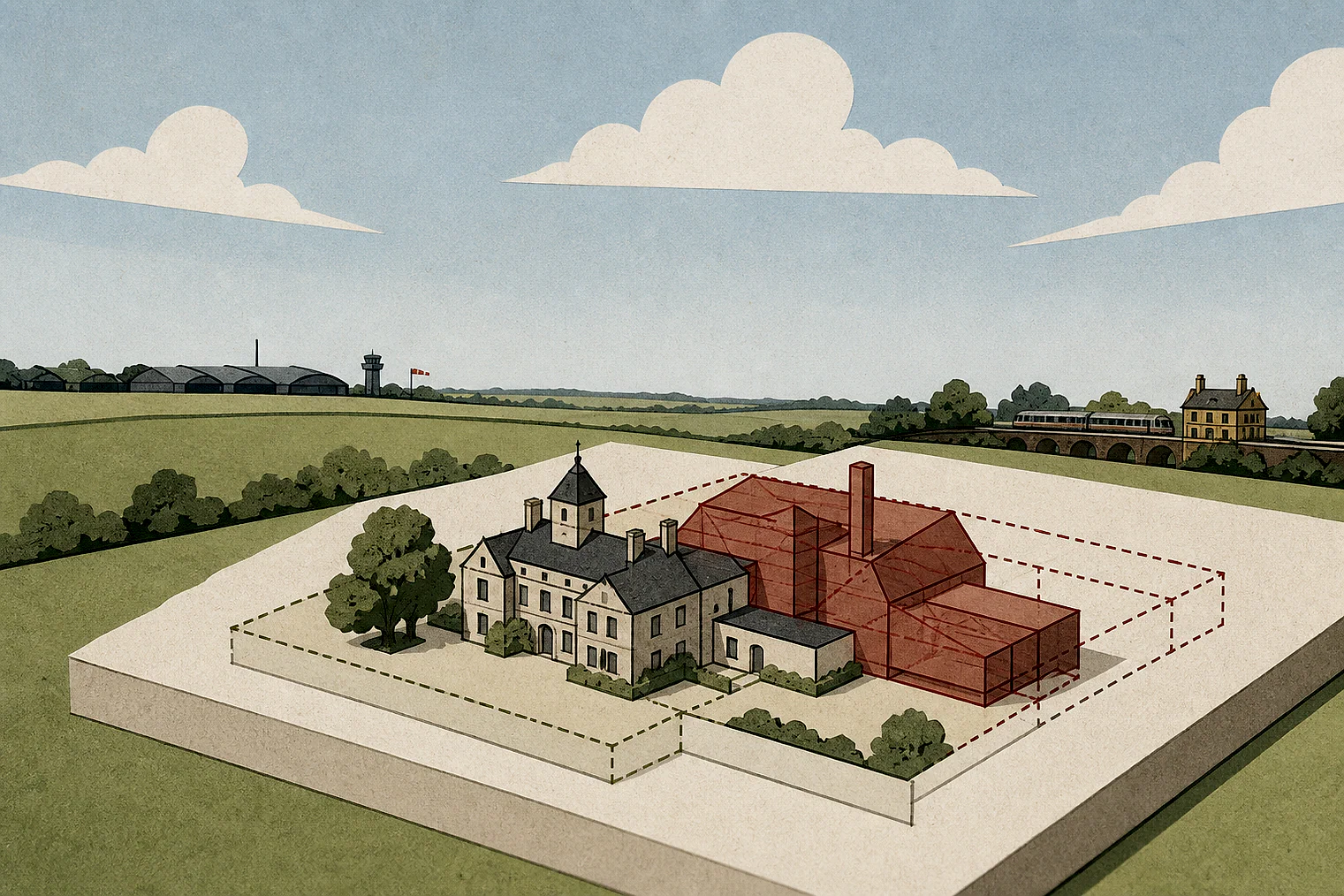
Planning Data area point: Havering LPA (51.563125, 0.220447). This is the published representative point for the authority boundary, not a town hall, camera position or appeal site.
London Borough of Havering appeal findings
Havering Green Belt: scale, openness and inappropriateness
The selected examples lean towards allowed appeals unlike the matched local set. The only dismissed extract gives a conclusion, not its earlier analysis.
Counted against appeals
Havering Green Belt harm not outweighed
Green Belt openness was eroded
The conclusion says the annex and gym proposal would erode Green Belt openness and be inappropriate development.
Other considerations could not outweigh harm
The conclusion gave other considerations moderate weight but found them insufficient to clearly outweigh the Green Belt harms.
Helped or needed
Why Havering Green Belt schemes were not inappropriate
Building removal reduced site spread
Removing a conservatory and garage reduced building spread. The flat landscape also mattered before the Inspector found no substantial openness harm despite highway visibility.
Scale stayed proportionate to the house
The proposed outbuilding was not cramped in its garden or disproportionate to the house, so it was not treated as inappropriate.
Openness and Green Belt purposes were preserved
The conclusion found that the ancillary recreation buildings would preserve openness and not conflict with Green Belt purposes.
Your refusal notice
Check these details
- Does the refusal identify Green Belt openness as harmed?
- Does it explain why other considerations do not outweigh that harm?
- Is the proposal disproportionate to the original house?
The dismissed Havering example supplies only a conclusion, not the Inspector's earlier reasoning. These decisions do not predict another result.
Appeal evidence examples
Compare allowed and dismissed appeal reasoning
Each example separates the development, the Inspector-stated issue that selected it, and the reasoning from the decision. Compare the facts as well as the outcome: these examples do not predict how a different proposal would be decided.
Allowed appeal examples
4 examples
9 January 2026 · Allowed
Development described in the decision
single storey rear extension and first floor side extension following conversion of existing garage.
Issue identified by the Inspector
The main issues relevant to this appeal are: • whether the proposal would be inappropriate development in the Green Belt having regard to the National Planning Policy Framework (the Framework) and relevant development plan policies • the effect of the proposal on the character and appearance of the area; and • the effect of the proposal on the living conditions of the occupiers of [address] with regard to outlook.
Paragraph 3 · Source page 2
Reasoning from the decision
Therefore, for the reasons given above, the proposal would comply with paragraph 154c) of the Framework and thus would be not inappropriate development in the Green Belt. Given that the proposal would be not inappropriate development in the Green Belt it would also comply with Policy G2 of the LP as well as generally be in accordance with Policies 7 and 26 of the Havering Local Plan (LP) insofar as they relate to development in the Green Belt.
Paragraph 13 · Source page 3
8 December 2025 · Allowed
Development described in the decision
demolition of existing buildings and extensions and construction of double storey side extension, new raised roof, internal reconfiguration and material changes to elevation.
Issue identified by the Inspector
The main issue is whether the proposal would be inappropriate development in the Green Belt having regard to the National Planning Policy Framework (the Framework) and relevant development plan policies, including an assessment of the effect of the proposal on the openness of the Green Belt.
Paragraph 2 · Source pages 1, 2
Reasoning from the decision
However, the demolition of the existing conservatory on one end of the building and the detached garage at the other end, would reduce the spread of buildings across the appeal site. In addition, the appeal site is located in a landscape which lacks undulation. The flat topography of the appeal site and the wider landscape, results in a heightened sense of openness. In these circumstances, and notwithstanding that it would be visible from the highway, the openness of the Green Belt would not be notably diminished as a result of the appeal proposal. It therefore follows that the appeal proposal would not cause substantial harm to the openness of the Green Belt. Thus, there is no need to assess the proposal against exception c).
Paragraph 8 · Source page 2
4 February 2022 · Allowed
Development described in the decision
described as a revised and reduced enclosure to the swimming pool.
Issue identified by the Inspector
The main issues in this case are: a) whether the proposal would be inappropriate development in the Green Belt for the purposes of the Framework and development plan policy; b) the effect of the proposal on the openness of the Green Belt; and c) if the development is inappropriate, whether the harm by reason of inappropriateness, and any other harm, is clearly outweighed by other considerations so as to amount to the very special circumstances necessary to justify development.
Paragraph 4 · Source page 2
Reasoning from the decision
Together these factors would result in the proposed outbuilding not being cramped within the garden space, and not being disproportionate to the house. Therefore, the proposal would not result in disproportionate additions over and above the size of the original building. As this would comply with Paragraph 149(c) of the Framework, the proposal would not be inappropriate development in the Green Belt for the purposes of the Framework and development plan policy. Accordingly, the proposal would not conflict with the [name] xvi) and Policy G2 of The London Plan.
Paragraph 12 · Source page 3
10 April 2026 · Allowed
Development described in the decision
described as single storey buildings ancillary to existing use of land for outdoor recreation.
Issue identified by the Inspector
The main issues are: i) Whether the proposal would be inappropriate development in the Green Belt having regard to the National Planning Policy Framework; ii) The effect of the proposal on the openness and purposes of the Green Belt; and iii) Whether any harm by reason of inappropriateness would be clearly outweighed by other considerations, so as to amount to the very special circumstances required to justify the proposal.
Paragraph 3 · Source page 1
Reasoning from the decision
In conclusion the proposed development would preserve the openness of the Green Belt and would not conflict with the purposes of including the land within the Green Belt. Given the conclusions under Matter 1, the proposed development would therefore not be inappropriate development. Accordingly, I do not find conflict with Policy G2 of the London Plan (adopted March 2021) which amongst other matters seeks to protect the Green Belt from inappropriate development. Similarly, I conclude that the proposed development would not be in conflict with Section 13 of the Framework.
Paragraph 21 · Source page 4
Dismissed appeal examples
1 example
10 February 2026 · Dismissed
Development described in the decision
described as “extension to existing outbuilding / annex to create gym / rehabilitation room”.
Issue identified by the Inspector
The main issues are a) whether the proposal would be inappropriate development in the Green Belt b) its effect on the openness of the Green Belt and c) if the scheme would be inappropriate development, whether any harm by reason of inappropriateness, and any other harm, would be clearly outweighed by other considerations, as to amount to the very special circumstances required to justify it.
Paragraph 3 · Source page 1
Reasoning from the decision
The appeal proposals would be inappropriate development in the Green Belt. They would also unacceptably erode the Green Belt’s openness. As per the Framework, substantial weight should be afforded to any harm to the Green Belt. The other considerations I have considered above would, in combination, be worthy of moderate weight. This would be insufficient against the harms I have found, which any other considerations must clearly outweigh. Such that the very special circumstances needed to justify the appeal scheme do not exist. The proposed development would conflict with the development plan and material considerations, including the Framework, do not indicate a decision other than in accordance therewith. I therefore recommend that the appeal should be dismissed
Paragraph 16 · Source pages 3, 4