
Tameside Metropolitan Borough Council appeal evidence
Refused over Green Belt inappropriateness in Tameside Metropolitan?
See how selected examples treated Green Belt openness and inappropriate development.
Recently refused?
Create a free account for a private planning workspace.
No payment at signup. Refusal-review ordering may not be open.
- Matched locally
- 5 of 54
- eligible decision families
- Allowed
- 0
- matched appeal records
- Dismissed
- 5
- matched appeal records
- Householder
- 5
- of 5 matched records
AI-assisted. Cited sources and wording were checked before publication. Based on 5 source-linked examples shown below. Review method and limits.
Planning Data area point: Tameside LPA (53.477493, −2.062804). This is the published representative point for the authority boundary, not a town hall, camera position or appeal site.
Tameside Metropolitan Borough Council appeal findings
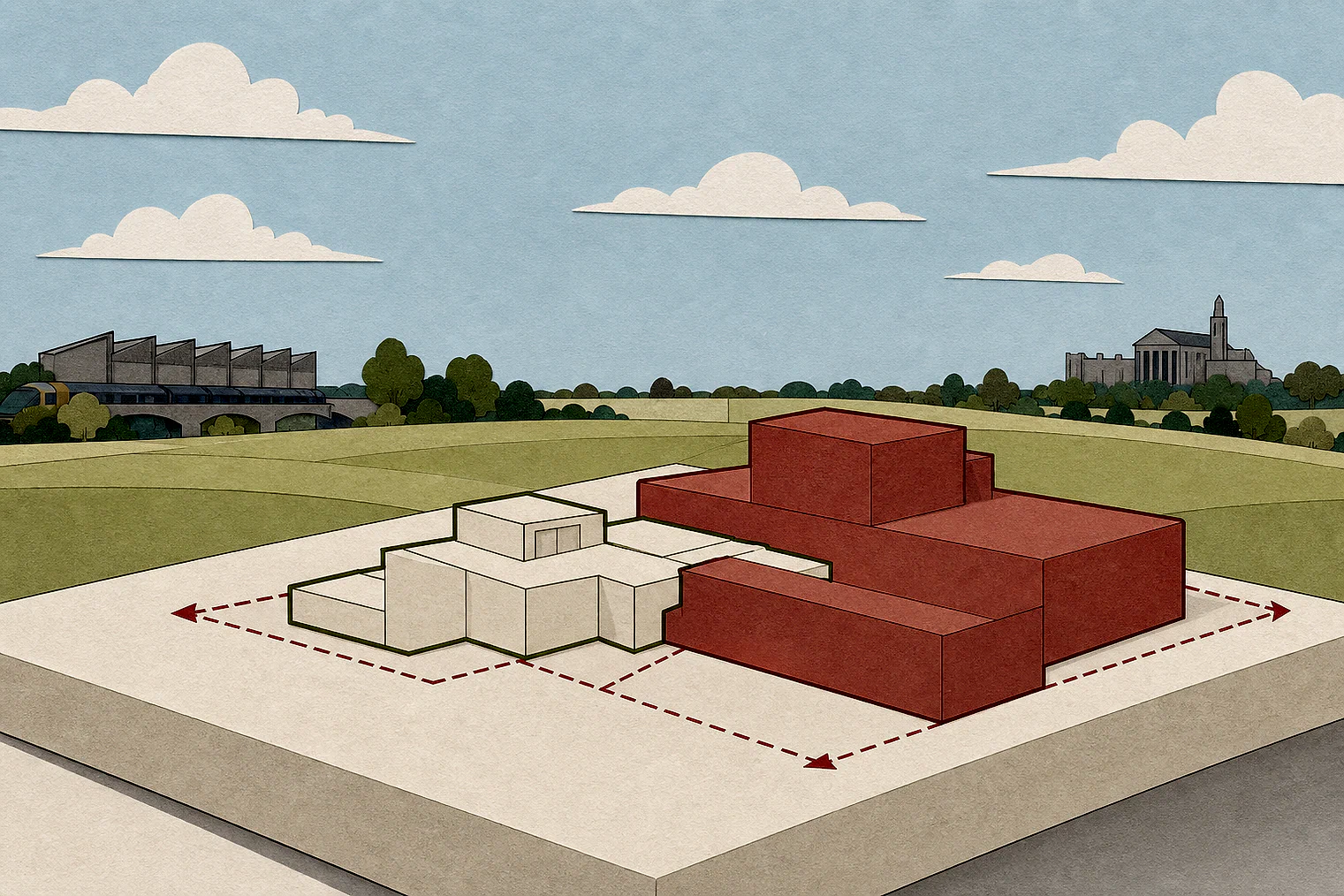
Why Green Belt openness counted against Tameside schemes
The matched local set has no allowed comparator, so the selected examples show dismissed reasoning only.
Counted against appeals
When Green Belt openness was harmed
A visible, enclosing fence
A lower fence with planting was still clearly visible from a well-used lane. Its solid form, height and length were found to harm openness.
Curtilage did not prevent harm
A garage and driveway did not go beyond the curtilage, yet were found to cause substantial harm to Green Belt openness.
Limited harm still mattered
A roof scheme had limited openness harm. Extension schemes had openness harm additional to inappropriateness.
No allowed example matched
No allowed local example
This snapshot has no allowed local example for this issue.
Visibility and enclosure still needed proof
Lower height and planting did not stop concern where the fence remained visible and enclosing from the lane.
Curtilage was not enough
The garage stayed within its curtilage, but the Inspector still found substantial harm to openness.
Inappropriateness remained separate
The extension examples treated openness harm as additional to harm already identified from inappropriateness.
Your refusal notice
Check these details
- Does the refusal notice identify harm to Green Belt openness?
- Does it mention visibility, enclosure, height or length?
- Does it address inappropriateness separately from openness?
No allowed appeal appears in the matched local set, so this page cannot show what helped locally. These decisions do not predict another result.
Appeal evidence examples
Read the reasoning in matched appeal decisions
Each example separates the development, the Inspector-stated issue that selected it, and the reasoning from the decision. Compare the facts as well as the outcome: these examples do not predict how a different proposal would be decided.
Dismissed appeal examples
5 examples
30 August 2022 · Dismissed
Development described in the decision
erection of 1.5 metre high timber boundary fence structure including proposed coverage with green landscape treatment planting.
Issue identified by the Inspector
Whether the proposal would be inappropriate development in the Green Belt having regard to the revised Framework and any relevant development plan policies.
Paragraph 1 · Source page 1
Reasoning from the decision
During my site visit, I noted the lane was well used by walkers and also by vehicles. The existing fence is highly conspicuous. Whilst the proposed fence would be some 30cm lower and would become partly obscured, in time, by planting, it would also be clearly visible to those using the lane. Moreover, given its solid nature, it would have an enclosing effect. Accordingly, the fence has both a visual and spatial dimension. As such, as a result of its height and length, the proposed fence would cause harm to openness. In the context of the Green Belt considered as a whole, that harm would be limited.
Paragraph 9 · Source page 2
12 September 2022 · Dismissed
Development described in the decision
described as ‘existing roof to be raised to create additional first floor space, rear extension, roof removed with new roof design added. New dormers added to the front elevation’.
Issue identified by the Inspector
The main issues are: • Whether the proposal would be inappropriate development in the Green Belt having regard to the development plan and the National Planning Policy Framework (the Framework); • The effect of the proposal on the openness of the Green Belt; and • If it is inappropriate development, whether the harm by reason of inappropriateness, and any other harm, is clearly outweighed by other considerations, so as to amount to the very special circumstances necessary to justify the development.
Paragraph 2 · Source page 1
Reasoning from the decision
The proposal would result in limited harm to the openness of the Green Belt. Paragraph 148 of the Framework states that substantial weight should be given to any harm to the Green Belt. The proposal would conflict with the aims of the Framework and would be contrary to UDP Policy OL2 of the UDP which seek, amongst other things, to prevent harm to the Green Belt.
Paragraph 10 · Source page 2
22 April 2026 · Dismissed
Development described in the decision
described as a “double storey side / single storey front extension to dwelling”.
Issue identified by the Inspector
The main issues are a) whether the proposal would be inappropriate development in the Green Belt; b) the effect of the proposal on the openness of the Green Belt; and c) if the scheme is inappropriate development, whether the harm by reason of inappropriateness, and any other harm, is clearly outweighed by other considerations, as to amount to very special circumstances required to justify it.
Paragraph 3 · Source page 1
Reasoning from the decision
This would result in further conflict with the Framework and the aims of the aforementioned policies as far as they align therewith. Harm to the openness of the Green Belt would be in addition to that caused by the proposals’ inappropriateness.
Paragraph 11 · Source page 2
8 August 2025 · Dismissed
Development described in the decision
the erection of a detached garage/workshop and associated driveway.
Issue identified by the Inspector
The main issues are: • whether the proposal is inappropriate development in the Green Belt, having regard to the development plan and the National Planning Policy Framework (Framework); and • if the proposal is inappropriate development, whether the harm by reason of inappropriateness, and any other harm, is clearly outweighed by other considerations so as to amount to the very special circumstances necessary to justify the development.
Paragraph 2 · Source page 1
Reasoning from the decision
In relation to the purposes of the Green Belt, as the proposal does not seek to extend beyond the curtilage, I do not consider that it would conflict with any of its purposes, including that purpose which seeks to safeguard the countryside from encroachment. The proposal would however overall result in substantial harm to the openness of the Green Belt, and it would not meet the requirements of paragraph 154 g) of the Framework.
Paragraph 9 · Source page 2
6 June 2025 · Dismissed
Development described in the decision
single storey side / front extension to dwelling.
Issue identified by the Inspector
The main issues are: • Whether or not the proposal is inappropriate development in the Green Belt having regard to the National Planning Policy Framework (the Framework) and any relevant development plan policies; • The effect of the proposal on the openness of the Green Belt; • The effect of the proposal on the character and appearance of the area; and • If it is inappropriate development whether the harm by reason of inappropriateness, and any other harm, is clearly outweighed by other considerations so as to amount to the very special circumstances necessary to justify the development.
Paragraph 2 · Source page 1
Reasoning from the decision
I recognise that the extent of impact on the openness and thus, the effect on the related Green Belt purposes, would be small. Nonetheless, this adds to the harm that I have already identified by reason of inappropriateness and to the conflict with the aforementioned policy documents.
Paragraph 12 · Source page 2