
Thurrock Council appeal evidence
Refused over neighbour living conditions in Thurrock?
See the neighbour-living problems inspectors identified and the facts to check against your refusal.
Recently refused?
Create a free account for a private planning workspace.
No payment at signup. Refusal-review ordering may not be open.
- Matched locally
- 19 of 115
- eligible decision families
- Allowed
- 3
- matched appeal records
- Dismissed
- 16
- matched appeal records
- Householder
- 15
- of 19 matched records
AI-assisted. Cited sources and wording were checked before publication. Based on 5 source-linked examples shown below. Review method and limits.
Planning Data area point: Thurrock LPA (51.50598, 0.373249). This is the published representative point for the authority boundary, not a town hall, camera position or appeal site.
Thurrock Council appeal findings
Thurrock evidence on disturbance, daylight and outdoor space
The selected examples have a different outcome mix from the matched local set. The allowed extract gives only a conclusion.
Counted against appeals
Disturbance, daylight and outdoor space
No workable disturbance control
The inspector found no practicable alternative to Condition 16 for preventing disturbance to neighbours.
No external amenity space
Without external space, residents could not sit outside or hang washing. The inspector found considerable harm.
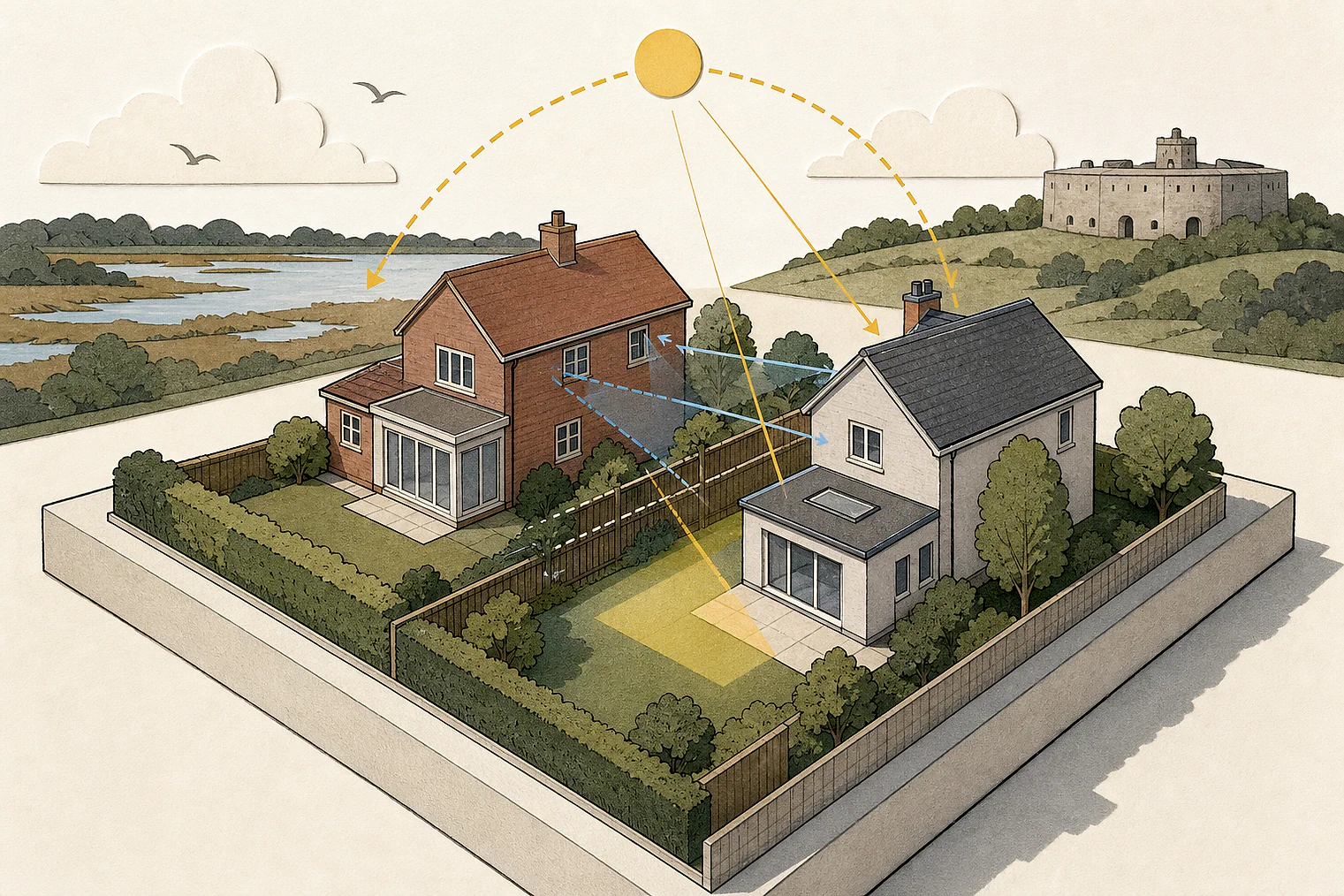
Outlook, daylight and sunlight
Outlook, daylight and sunlight were named concerns. The inspector concluded the extension significantly harmed occupants of the two neighbouring homes.
Helped or needed
Limited harm to nearby occupiers
Only limited harm concluded
The inspector concluded the eight-unit proposal would cause limited harm to nearby occupiers’ living conditions.
Your refusal notice
Check these details
- Does the refusal identify a workable way to prevent noise or disturbance?
- Does it explain effects on outlook, daylight or sunlight at neighbouring homes?
- Does the proposal provide usable outdoor amenity space for every future occupant?
The allowed example also considered access, parking and habitat effects, while its extract gives only a limited-harm conclusion. These decisions do not predict another result.
Appeal evidence examples
Compare allowed and dismissed appeal reasoning
Each example separates the development, the Inspector-stated issue that selected it, and the reasoning from the decision. Compare the facts as well as the outcome: these examples do not predict how a different proposal would be decided.
Allowed appeal examples
1 example
16 April 2026 · Allowed
Development described in the decision
a residential development comprising eight units (all matters reserved except layout and access).
Issue identified by the Inspector
The main issues are: • the effect of the proposal on the living conditions of neighbouring occupiers, with particular regard to privacy, outlook, noise and disturbance; • the effect of the proposal on highway safety, with particular regard to the proposed access; • whether the proposal would provide adequate parking; and • the effect of the proposal on the integrity of the [name] and Marshes Special Protection Area (SPA) and Ramsar site.
Paragraph 5 · Source pages 1, 2
Reasoning from the decision
I therefore conclude that the proposal would cause limited harm to the living conditions of nearby occupiers. It would conflict with Policy PMD1 of the adopted Thurrock Local Development Framework Core Strategy and Policies for the Management of Development (the ‘Local Plan’) insofar as it seeks to ensure that developments do not cause unacceptable effects on the amenity of neighbouring occupants.
Paragraph 15 · Source page 3
Dismissed appeal examples
4 examples
21 April 2026 · Dismissed
Development described in the decision
erection of 10 B2/B8 commercial units, with mezzanine space with associated parking area, bicycle storage, refuge storage, and landscaping without complying with a condition attached to planning permission 23/00311/FUL, dated 6 June 2024.
Issue identified by the Inspector
The main issue in this appeal is whether Condition 16 attached to the planning permission, Council Reference 23/00311/FUL, is necessary and reasonable to safeguard the living conditions of neighbours.
Paragraph 3 · Source page 1
Reasoning from the decision
Under such circumstances, a condition requiring approval of the NMP by the Council would not be reasonable as the Council could not be certain what they are, ultimately, approving. It would be unreasonable to expect the Council to commit to an open-ended ongoing review process. I therefore find that, in the absence of any alternative, practicable means of controlling disturbance, Condition 16 provides the necessary and reasonable means of control to safeguard the living conditions of neighbours. In the absence of Condition 16 there would be inadequate measures to prevent disturbance, contrary to the aims of Policy PMD1 of the LDFCS.
Paragraph 15 · Source page 3
24 February 2026 · Dismissed
Development described in the decision
change of use of first floor from storage (ancillary to Class E) to residential use (Use Class C3) and external alterations including the enlargement of existing windows to front of building at first floor.
Issue identified by the Inspector
The main issues are the effect of the proposal on: • the character and appearance of the host building and area; and • the living conditions of the occupants, with specific regard to external amenity space.
Paragraph 8 · Source page 2
Reasoning from the decision
No external amenity space is proposed. As such, occupiers of the development could not undertake the usual activities associated with external private space, such as sitting outside or hanging out washing. Therefore, the development would not provide adequate external amenity space which would result in considerable harm to the living conditions of the future occupiers of the development and would therefore conflict with Policy PMD1 of the CSPMD.
Paragraph 16 · Source page 3
13 February 2026 · Dismissed
Development described in the decision
single storey rear extension.
Issue identified by the Inspector
The main issue is the effect of the proposal on the living conditions of the occupiers of 151 and [address], with particular regard to outlook, daylight and sunlight.
Paragraph 2 · Source page 1
Reasoning from the decision
The development would therefore cause a significant adverse effect on the living conditions of the occupiers of both Nos 151 and 155. The appeal proposal would therefore conflict with Policy PMD1 of the [name] and Policies for Management of Development (2015). This policy, amongst other matters, seeks to ensure that development would not cause unacceptable effects on the amenities of neighbouring occupants.
Paragraph 7 · Source page 2
16 January 2026 · Dismissed
Development described in the decision
demolition of existing premises and construction new three-storey block to provide a mixed scheme of 2 retail units and 7no. apartments.
Issue identified by the Inspector
The main issues are the effect of the proposed development on a) highway safety in relation to parking provision and deliveries; and b) the living conditions of future occupiers.
Paragraph 3 · Source page 1
Reasoning from the decision
As the proposal would be unlikely to provide satisfactory living conditions for all future occupants, I find that it would be contrary to [name] 1 and PMD 2 of the CSPMD which, amongst other things, require developments to provide appropriate amenity space and not cause unacceptable effects on the amenity of future occupiers.
Paragraph 27 · Source page 4