
Wakefield Metropolitan District Council appeal evidence
Refused over neighbour living conditions in Wakefield Metropolitan?
See the neighbour-amenity harms inspectors identified and the extension findings that avoided harm.
Recently refused?
Create a free account for a private planning workspace.
No payment at signup. Refusal-review ordering may not be open.
- Matched locally
- 25 of 84
- eligible decision families
- Allowed
- 7
- matched appeal records
- Dismissed
- 18
- matched appeal records
- Householder
- 22
- of 25 matched records
AI-assisted. Cited sources and wording were checked before publication. Based on 5 source-linked examples shown below. Review method and limits.
Planning Data area point: Wakefield LPA (53.660681, −1.411806). This is the published representative point for the authority boundary, not a town hall, camera position or appeal site.
Wakefield Metropolitan District Council appeal findings
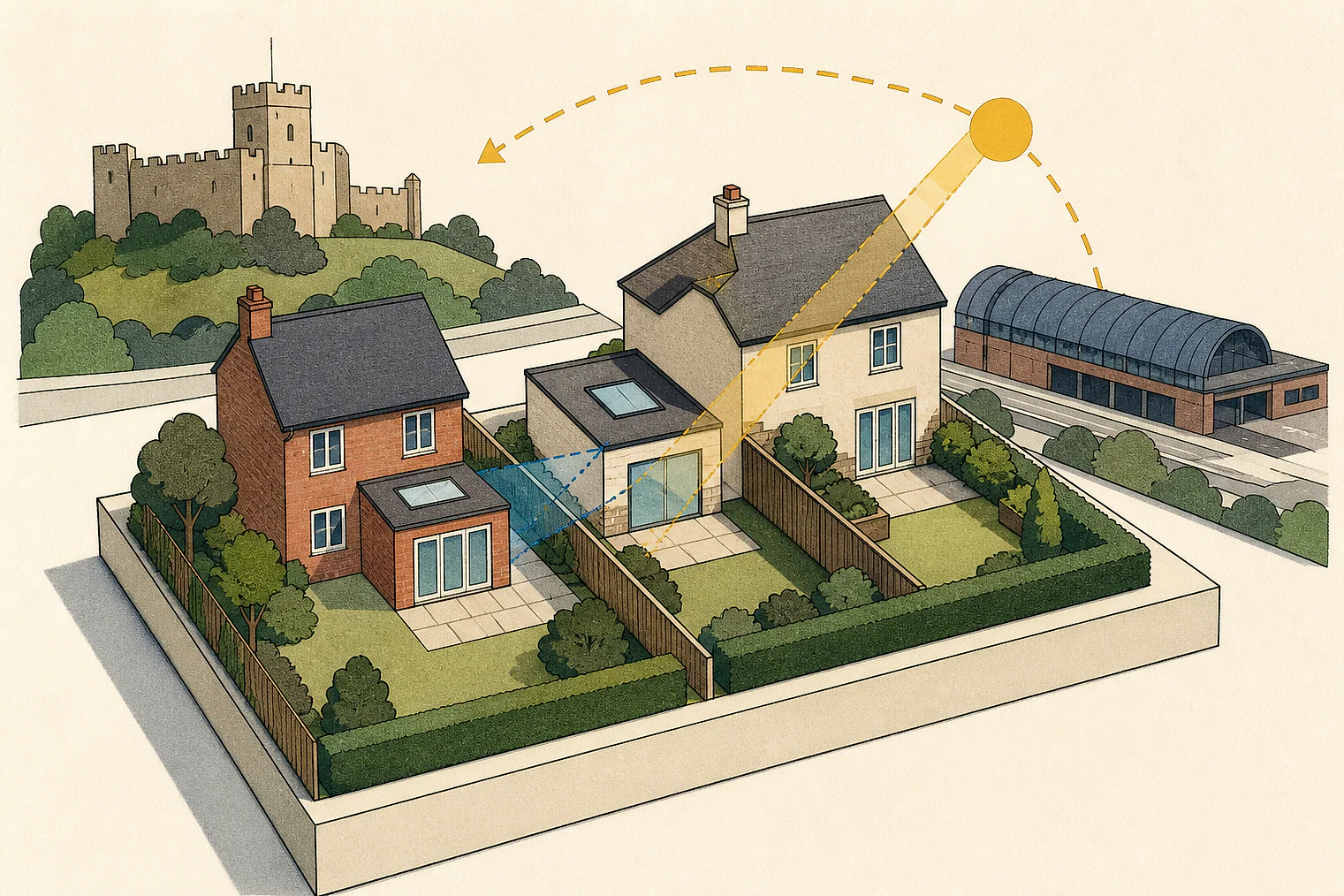
Wakefield examples: noise, outlook and light
Appeal 91188 is a conclusion-only example alongside Green Belt, drainage and tree issues, so it is edge evidence here.
Counted against appeals
Noise, disturbance and future conditions
HMO activity disturbed neighbours
The inspector found that activity from a large HMO would erode nearby residents’ reasonable living conditions through noise and disturbance.
Future conditions were not acceptable
Alongside other harms, the inspector concluded that the detached bungalow would fail to provide acceptable living conditions for future occupants.
Helped or needed
Outlook, light and overshadowing findings
Outlook and light were acceptable
The two-storey extension was found not to unacceptably affect the neighbouring occupiers’ outlook or light.
No significant overbearing effect
The rear extension was found not to significantly harm the neighbour’s living conditions through overbearing, overshadowing or light.
Outlook was not harmed
The rear single-storey extension was found not to harm No 39’s living conditions with regard to outlook.
Your refusal notice
Check these details
- Does the refusal identify noise or disturbance for neighbours?
- Does it explain any loss of outlook or light?
- Are future occupants’ indoor and outdoor conditions addressed?
The selected Wakefield examples cover extensions, an HMO and a bungalow, so their facts may differ from yours. These decisions do not predict another result.
Appeal evidence examples
Compare allowed and dismissed appeal reasoning
Each example separates the development, the Inspector-stated issue that selected it, and the reasoning from the decision. Compare the facts as well as the outcome: these examples do not predict how a different proposal would be decided.
Allowed appeal examples
3 examples
6 April 2022 · Allowed
Development described in the decision
a two-storey side and rear extension.
Issue identified by the Inspector
The main issue is the effect of the proposed development upon the living conditions of the occupiers of the neighbouring residential property at [address], with particular regard to outlook and light.
Paragraph 4 · Source page 2
Reasoning from the decision
I therefore conclude that the proposed development would not unacceptably affect the living conditions of the occupiers of the neighbouring residential property at [address], with particular regard to outlook and light. The proposal therefore accords with the relevant provisions of Policies D9 and D10 of the Local Development Framework Development Policies Document (2009) and the National Planning Policy Framework (the Framework) which seek to ensure a high standard of amenity for existing and future users.
Paragraph 9 · Source page 2
15 May 2026 · Allowed
Development described in the decision
for a single storey rear extension.
Issue identified by the Inspector
The main issues are the effect of the development on: a) the character and appearance of the building and surrounding area; and, b) the living conditions of the occupiers of No.[address] with particular regard to overbearing, overshadowing and light.
Paragraph 4 · Source page 1
Reasoning from the decision
For the above reasons, I conclude that the development does not have a significantly harmful effect on the living conditions of the occupiers of No.[address] with particular regard to overbearing, overshadowing and 1 As set out in the RDG, paragraphs 1.07.06 and 1.07.07 2 25/00052/FUL light. Therefore, the development complies with Policy LP57 of the LP. This requires that extensions to dwellings respect residential amenity by avoiding harmful effects through overbearing and overshadowing.
Paragraph 17 · Source pages 3, 4
3 April 2025 · Allowed
Development described in the decision
rear single storey extension.
Issue identified by the Inspector
The main issues are the effect of the proposal on the character and appearance of the host dwelling and wider area; and the effect of the proposed development on the living conditions of the occupants of [address] with particular regard to outlook.
Paragraph 3 · Source page 1
Reasoning from the decision
Therefore, the proposed development would not harm the living conditions of No 39, with specific regard to outlook. As such, the proposal would comply with Policies LP56 and LP57 of the Local Plan, which both seek amongst other things for extensions and alterations to dwellings to respect residential amenity.
Paragraph 8 · Source page 2
Dismissed appeal examples
2 examples
30 June 2026 · Dismissed
Development described in the decision
detached bungalow.
Issue identified by the Inspector
The main issues are: • whether the proposal would be inappropriate development in the Green Belt having regard to the National Planning Policy Framework (the Framework) and relevant development plan policies, including any relevant effects on the openness of the Green Belt; • the effect of the proposed dwelling on neighbouring trees; • whether the proposal would provide adequate living conditions for future occupants, with particular reference to indoor and outdoor environments; • whether the proposal would make suitable provision for the disposal of foul water; and, • whether the harm by reason of inappropriateness, and any other harm, would be clearly outweighed by other considerations, so as to amount to the very special circumstances required to justify the proposal.
Paragraph 3 · Source page 1
Reasoning from the decision
The proposal would constitute inappropriate development in the Green Belt, which would harm its openness and conflict with the purpose of safeguarding the countryside from encroachment. As such, the Framework requires that I give this harm substantial negative weight. In addition, I have found that the scheme would fail to provide acceptable living conditions for future occupants, would not demonstrate that adequate foul drainage infrastructure would be available, and would not demonstrate that its effect on trees would be acceptable. These matters attract further negative weight.
Paragraph 22 · Source page 4
29 May 2026 · Dismissed
Development described in the decision
No verified development description was available for this example.
Issue identified by the Inspector
The main issues are: • whether the proposed development would provide acceptable living conditions for future occupants, with particular regard to internal living space and facilities; and, • the effect of the proposed development on the living conditions of occupants of neighbouring properties, with particular regard to noise and disturbance.
Paragraph 3 · Source page 1
Reasoning from the decision
The cumulative effect of activity generated by a large HMO in this prominent and quiet position would erode the reasonable living conditions enjoyed by nearby residents. I therefore conclude that the proposal would cause unacceptable harm to the living conditions of neighbouring occupants, with particular regard to noise and disturbance. It follows that the scheme would conflict with Policies LP56 and LP67 of the LP, which together seek to protect, among other things, residential amenity from unacceptable noise and disturbance.
Paragraph 14 · Source page 3