
London Borough of Newham appeal evidence
Refused over living conditions in Newham?
See noise, cramped layouts and outdoor-space concerns in the selected examples, and what the allowed example does not explain.
Recently refused?
Create a free account for a private planning workspace.
No payment at signup. Refusal-review ordering may not be open.
- Matched locally
- 38 of 91
- eligible decision families
- Allowed
- 10
- matched appeal records
- Dismissed
- 28
- matched appeal records
- Householder
- 30
- of 38 matched records
AI-assisted. Cited sources and wording were checked before publication. Based on 5 source-linked examples shown below. Review method and limits.
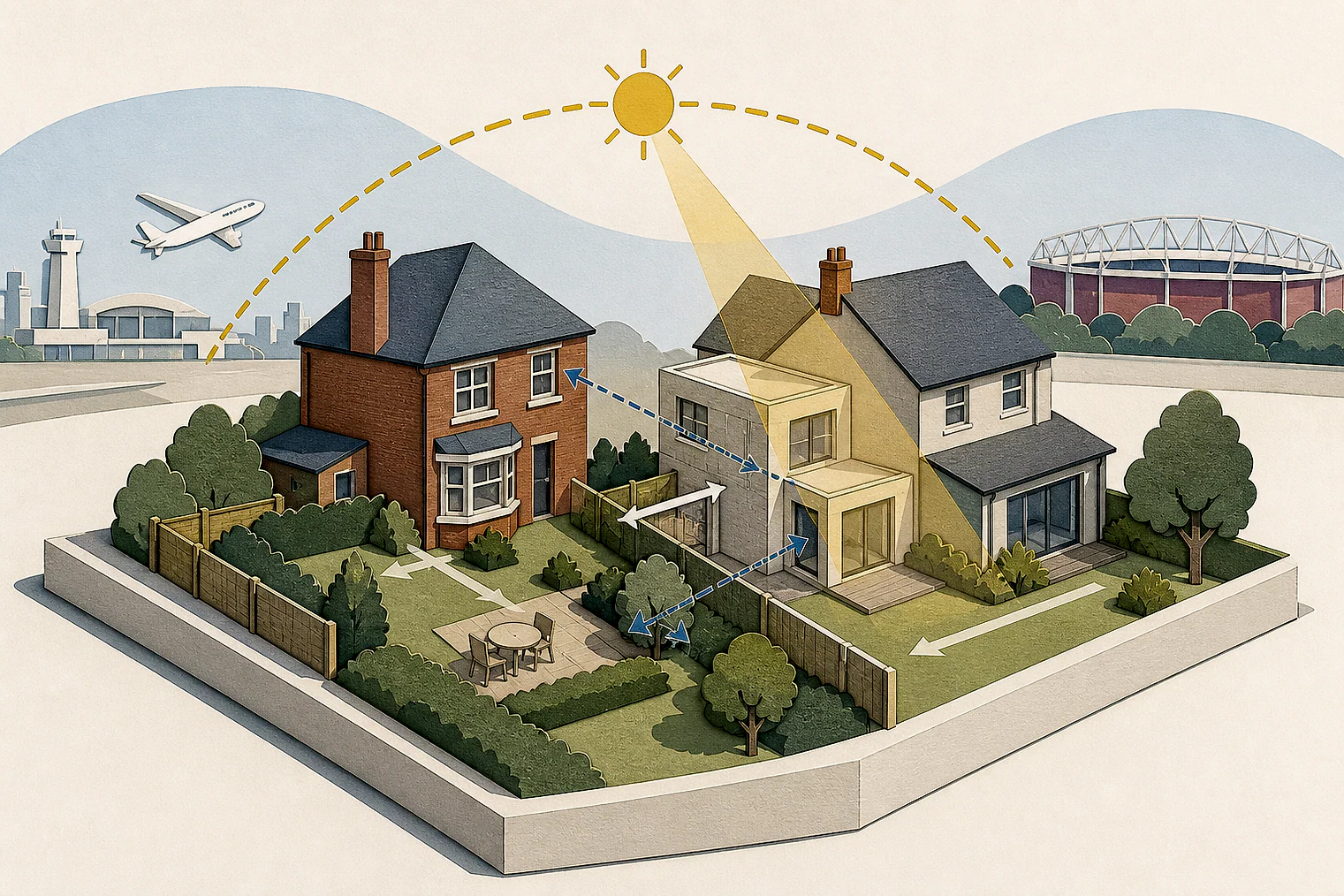
Planning Data area point: Newham LPA (51.52689, 0.037561). This is the published representative point for the authority boundary, not a town hall, camera position or appeal site.
London Borough of Newham appeal findings
Newham living conditions: noise, room size and outdoor space
The selected allowed example contains only a final conclusion, so it does not reveal why the Inspector found the living conditions acceptable.
Counted against appeals
Newham noise, cramped rooms, outdoor space
Noise at No 36
The Inspector was not convinced the development protected occupants of No 36 from noise and disturbance.
Rooms too small once furnished
The minimum floor area and bedroom width fell short. The narrow layout was likely to leave little room to move once furnished.
External amenity space
The Inspector concluded it would not provide acceptable living conditions for future occupants.
Helped or needed
Newham future-user conditions accepted
No supporting detail shown
The Inspector concluded the scheme would ensure acceptable living conditions for future users, without explaining the supporting evidence.
Your refusal notice
Check these details
- Does the refusal identify noise or disturbance at a named neighbouring home?
- Do your plans meet minimum room sizes, bedroom widths and internal floor area?
- Does the refusal explain whether your outdoor amenity space is inadequate?
The selected extract for appeal 89134 finds no noise or disturbance harm, but does not explain the dismissal. These decisions do not predict another result.
Appeal evidence examples
Compare allowed and dismissed appeal reasoning
Each example separates the development, the Inspector-stated issue that selected it, and the reasoning from the decision. Compare the facts as well as the outcome: these examples do not predict how a different proposal would be decided.
Allowed appeal examples
1 example
28 April 2026 · Allowed
Development described in the decision
described as ‘Change of use of the ground floor flat and first floor flat from residential (use C3) to residential institution (use C2) to provide 2x children’s care homes.’
Issue identified by the Inspector
The main issues in this appeal are: • the effect of the proposed development on the supply of family housing; • whether the proposed development would be in a suitable location, with regard to identified need; and • whether the proposed development would provide acceptable living conditions for future users.
Paragraph 4 · Source page 1
Reasoning from the decision
Overall, based on the evidence before me, on balance I am satisfied that the scheme would ensure acceptable living conditions for future users. I do not find any conflict with Policies S1, SP3 and H3 of the NLP in this regard. Collectively, these policies seek to ensure that developments are of high-quality design.
Paragraph 22 · Source page 4
Dismissed appeal examples
4 examples
21 May 2026 · Dismissed
Development described in the decision
the change of use from two-bedroom dwelling to C4 small HMO for up to 5 persons together with rear dormer extension.
Issue identified by the Inspector
The main issues are: • the effect of the proposed development on the supply of family-sized homes in the Borough; • whether the proposed development would provide suitable living conditions for future occupants of the development, with regard to privacy and noise and disturbance; and • the effect of the proposed development on the living conditions of the occupants of neighbouring dwellings, with regard to noise and disturbance.
Paragraph 3 · Source page 1
Reasoning from the decision
I conclude that the proposal would not harm the living conditions of the occupants of neighbouring dwellings with regard to noise and disturbance. The development therefore accords with Policies SP2, SP8 and H3 of the NLP and Policies GG1, GG3 and D14 of the LonP, which collectively, amongst other things, seek to ensure that Newham is an attractive place to live, creating healthy and quality neighbourhoods and ensuring neighbourly development and reduce and mitigate noise and protect quality of life.
Paragraph 18 · Source pages 3, 4
20 April 2026 · Dismissed
Development described in the decision
No verified development description was available for this example.
Issue identified by the Inspector
The main issues are: • the effect of the air conditioning units on the character and appearance of the surrounding area; and • the effect of the air conditioning units on the living conditions of the occupants of [address] (No 36) regarding noise and disturbance.
Paragraph 3 · Source page 1
Reasoning from the decision
For the above reasons, I am not convinced that the development protects the living conditions of the occupants of No 36 from the effects of noise and disturbance. Consequently, the development is contrary to London Plan Policy D14 and LP Policy SP8, which, amongst other things, expect development to promote neighbourliness by avoiding unacceptable exposure to noise and disturbance.
Paragraph 12 · Source page 3
17 April 2026 · Dismissed
Development described in the decision
described as ‘Splitting the existing house into two dwellings (i.e number [site address] [site address] to have 12A [site address] as its address) which needs blocking one door and erecting a garden fence at the rear of the property’.
Issue identified by the Inspector
The main issues in this appeal are: • the effect of the development on the supply of larger family-sized housing in the Borough; and • whether the development would provide acceptable living conditions for future occupants with regard to internal space and storage.
Paragraph 4 · Source page 1
Reasoning from the decision
Based on the evidence that is before me, the dwelling would fall significantly below the minimum GIA standards, double bedroom width and overall bedroom floor space requirements. These shortfalls would be substantial, and a failure to meet the minimum size requirements is a strong indicator that the dwelling would provide unsatisfactory living conditions. Moreover, the plans indicate that No 12A would be narrow, and its constrained layout would likely leave limited space to manoeuvre around once the rooms are furnished. This would result in a cramped and uncomfortable living environment which would significantly compromise the living conditions of future occupiers. This would be contrary to paragraph 135 of the Framework, which seeks well-designed places providing a high standard of amenity for future users.
Paragraph 15 · Source page 3
16 April 2026 · Dismissed
Development described in the decision
the change of use of 4 commercial units (Class E) to form 4 apartments.
Issue identified by the Inspector
Considering the above, the main issue in this appeal is whether the development would provide acceptable living conditions for future occupiers with regard to external amenity space.
Paragraph 3 · Source page 1
Reasoning from the decision
For the above reasons, I therefore conclude that the appeal scheme would fail to provide acceptable living conditions for future occupants with particular regard to external amenity space. This is contrary to [name].4 and H.1 of the LLDCP and Policies D3 and D6 of the London Plan insofar as they seek to ensure that developments provide a high standard of residential accommodation, including in respect of the provision of sufficient, well-designed and appropriately located communal and private amenity space. It also conflicts with Paragraph 135 of the National Planning Policy Framework (the Framework), which seeks to ensure that developments create places with a high standard of amenity for existing and future users.
Paragraph 10 · Source page 2