
Portsmouth City Council appeal evidence
Refused over highway safety in Portsmouth?
See Portsmouth examples on access and parking, and the facts to compare with your refusal notice.
Recently refused?
Create a free account for a private planning workspace.
No payment at signup. Refusal-review ordering may not be open.
- Matched locally
- 5 of 52
- eligible decision families
- Allowed
- 4
- matched appeal records
- Dismissed
- 1
- matched appeal records
- Householder
- 1
- of 5 matched records
AI-assisted. Cited sources and wording were checked before publication. Based on 5 source-linked examples shown below. Review method and limits.
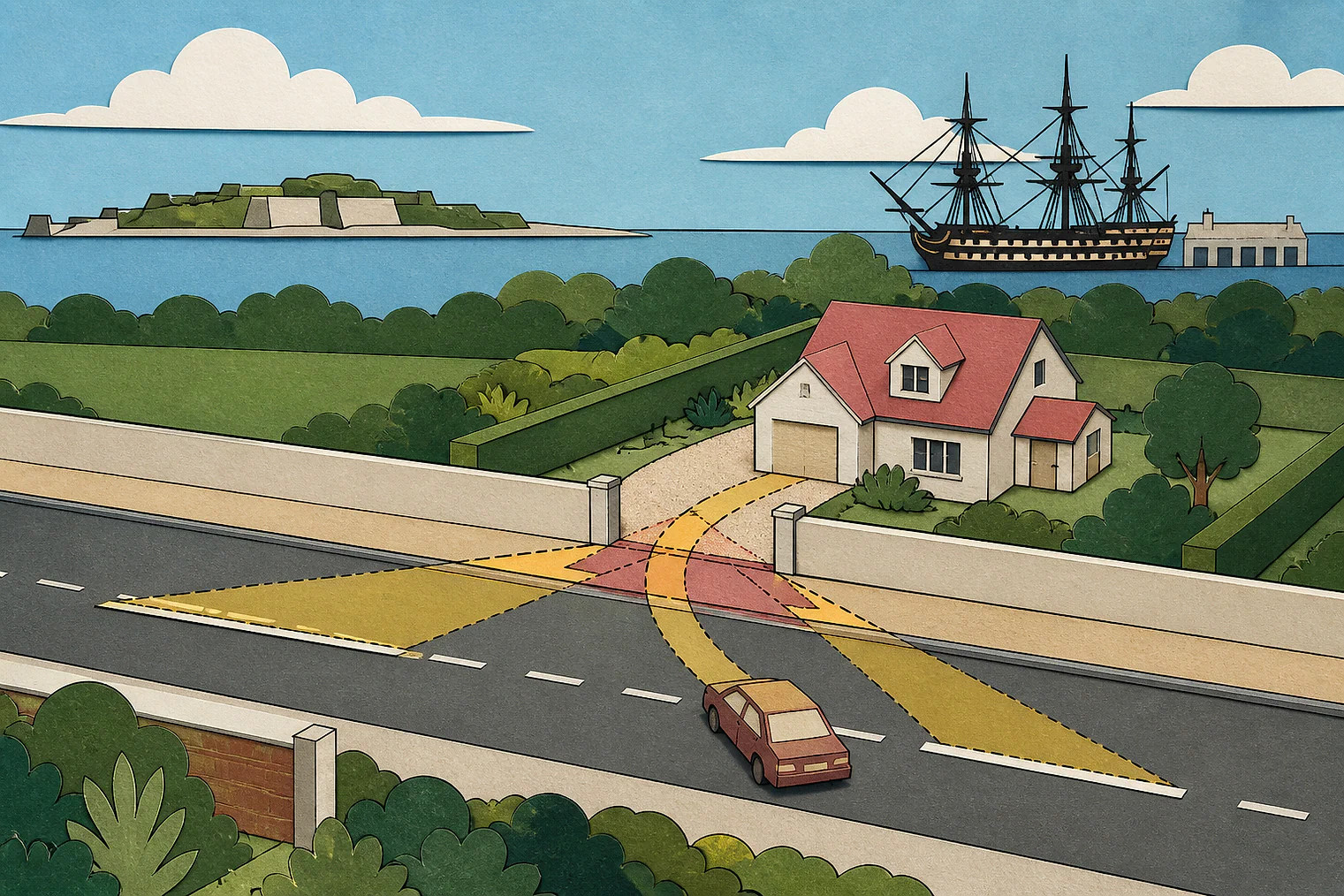
Planning Data area point: Portsmouth LPA (50.820439, −1.078363). This is the published representative point for the authority boundary, not a town hall, camera position or appeal site.
Portsmouth City Council appeal findings
Access visibility and parking evidence in Portsmouth
The selected examples include a dismissed decision with a conclusion-only extract, limiting what it can show about a highway-safety concern.
Counted against appeals
No highway-safety concern in dismissal
No highway-safety harm found
The Inspector concluded the proposal would not materially harm highway safety.
Helped or needed
Access visibility and parking in allowed examples
Local access conditions mattered
Although the visibility splays missed the criteria, local speeds, other access movements and no reported accidents led to no unacceptable safety risk.
Parking standards were not decisive
Despite not meeting the Council’s parking standards, the Inspector concluded the particular scheme would not materially harm highway safety.
Your refusal notice
Check these details
- Does the refusal identify a visibility-splay shortfall at the proposed access?
- What speeds, access movements and accident evidence does the refusal cite?
- Does the refusal explain how parking standards create a safety risk?
The selected examples cover different proposals, and some extracts give conclusions rather than the underlying analysis. These decisions do not predict another result.
Appeal evidence examples
Compare allowed and dismissed appeal reasoning
Each example separates the development, the Inspector-stated issue that selected it, and the reasoning from the decision. Compare the facts as well as the outcome: these examples do not predict how a different proposal would be decided.
Allowed appeal examples
4 examples
30 January 2023 · Allowed
Development described in the decision
to drop a kerb outside property.
Issue identified by the Inspector
The main issue is the effect on highway safety.
Paragraph 4 · Source page 1
Reasoning from the decision
Taking all the above together I am satisfied that while the visibility splays do not meet the relevant criteria, given the speeds in the area, that there are movements associated with other accesses in the area with no accidents reported to me, the proposal would not increase the risk to highway safety to an unacceptable extent. It would therefore not discourage accessibility to all users.
Paragraph 18 · Source page 3
2 June 2026 · Allowed
Development described in the decision
change of use from C3 dwellinghouse to [name] 7 bed, 7 person HMO.
Issue identified by the Inspector
The main issues are: • the effect of the proposed development on the availability of on-street car parking in the area, with particular regard to highway safety; and • the effect of the proposal on the integrity of the [name].
Paragraph 7 · Source page 2
Reasoning from the decision
I therefore conclude that the proposed development would not have an unacceptable effect on the availability of on-street car parking in the area, nor would it cause harm to highway safety. The proposal is in accordance with saved Policy PCS17 of the PLP in so far as it references that the parking standards for new development are set out in the PSTASPD. I also find no conflict with saved Policy PCS23 of the PLP which, amongst other matters, seeks new development to provide car parking and cycle storage to be secure, well designed, integral to the scheme and convenient to users.
Paragraph 15 · Source page 3
28 April 2026 · Allowed
Development described in the decision
change of use from C3 dwelling to C4 House of [name].
Issue identified by the Inspector
The main issue is the effect of the development on highway safety and residential amenity, with regards to car parking provision.
Paragraph 3 · Source page 1
Reasoning from the decision
For these reasons, the development would not give rise to an unacceptable impact on highway safety or residential amenity, with regards to car parking provision. It therefore accords with Policies PCS17 and PCS23 of the Portsmouth Plan 2012, insofar as they require that development does not materially worsen on-street parking or create parking conditions harmful to safety or amenity. It also complies with the Parking Standards Supplementary Planning Document (2014), which provides guidance on the application of those policies.
Paragraph 9 · Source page 2
5 July 2021 · Allowed
Development described in the decision
change of use from mixed use – retail (Class A1) and residential (Class C3) to purposes falling within Class C3 (dwelling house) or C4 (house in multiple occupancy) with associated alterations to shopfront and installation of two rooflights.
Issue identified by the Inspector
The main issue is the impact of the proposal on highway safety and the living conditions of local residents, having regard to the availability of on-street vehicle parking.
Paragraph 3 · Source page 2
Reasoning from the decision
For the above reasons, I conclude that, on the basis of the evidence before me, the proposal would not result in materially harmful impacts on highway safety or the living conditions of local residents due to the availability of on-street vehicle parking. As such, whilst not according with the Council’s vehicle parking standards as set out in the [name], having regard to the particular circumstances of the appeal scheme, the appeal proposal would not conflict with the objectives of Policies PCS17 and PCS23 of The Portsmouth Plan (2012), in so much as these policies encourage locating development where there is the potential to improve accessibility for all through walking, cycling and by public transport, and seek to ensure safe public spaces and the provision of a good standard of living environment for neighbouring and local occupiers and future residents and users of new development.
Paragraph 13 · Source page 3
Dismissed appeal examples
1 example
28 April 2026 · Dismissed
Development described in the decision
two storey rear extension, single storey first floor extension to convert the existing annex into 2 x two bedroom units.
Issue identified by the Inspector
The main issues are: • the effect of the proposed development on the character and appearance of the area; • the effect of the proposal on the living conditions of the occupiers of the neighbouring property, having regard to outlook; • weather the proposal would provide acceptable living conditions for future occupiers, having regard to privacy, outlook, living space, parking provision and waste storage; • whether the proposal would provide adequate safety for future occupiers in relation to flood risk, particularly for the ground floor flat; • the effect of the proposed development on highway safety; • whether the development would achieve nutrient neutrality, or otherwise secure appropriate mitigation for increased nutrient discharge affecting European designated sites; and • whether adequate mitigation is secured to address recreational disturbance impacts on the Solent Special Protection Areas (SPAs).
Paragraph 2 · Source page 1
Reasoning from the decision
For these reasons, the proposed development would not have a materially harmful effect on highway safety. Consequently, it complies with the Framework, insofar as it seeks to ensure safe and suitable access to sites for all users and the prevention of unacceptable impacts on highway safety.
Paragraph 30 · Source page 5