
Winchester City Council appeal evidence
Refused over harm to neighbours in Winchester?
See the harmful neighbour impact and why an HMO occupancy limit lacked supporting evidence.
Recently refused?
Create a free account for a private planning workspace.
No payment at signup. Refusal-review ordering may not be open.
- Matched locally
- 6 of 32
- eligible decision families
- Allowed
- 1
- matched appeal records
- Dismissed
- 5
- matched appeal records
- Householder
- 1
- of 6 matched records
AI-assisted. Cited sources and wording were checked before publication. Based on 5 source-linked examples shown below. Review method and limits.
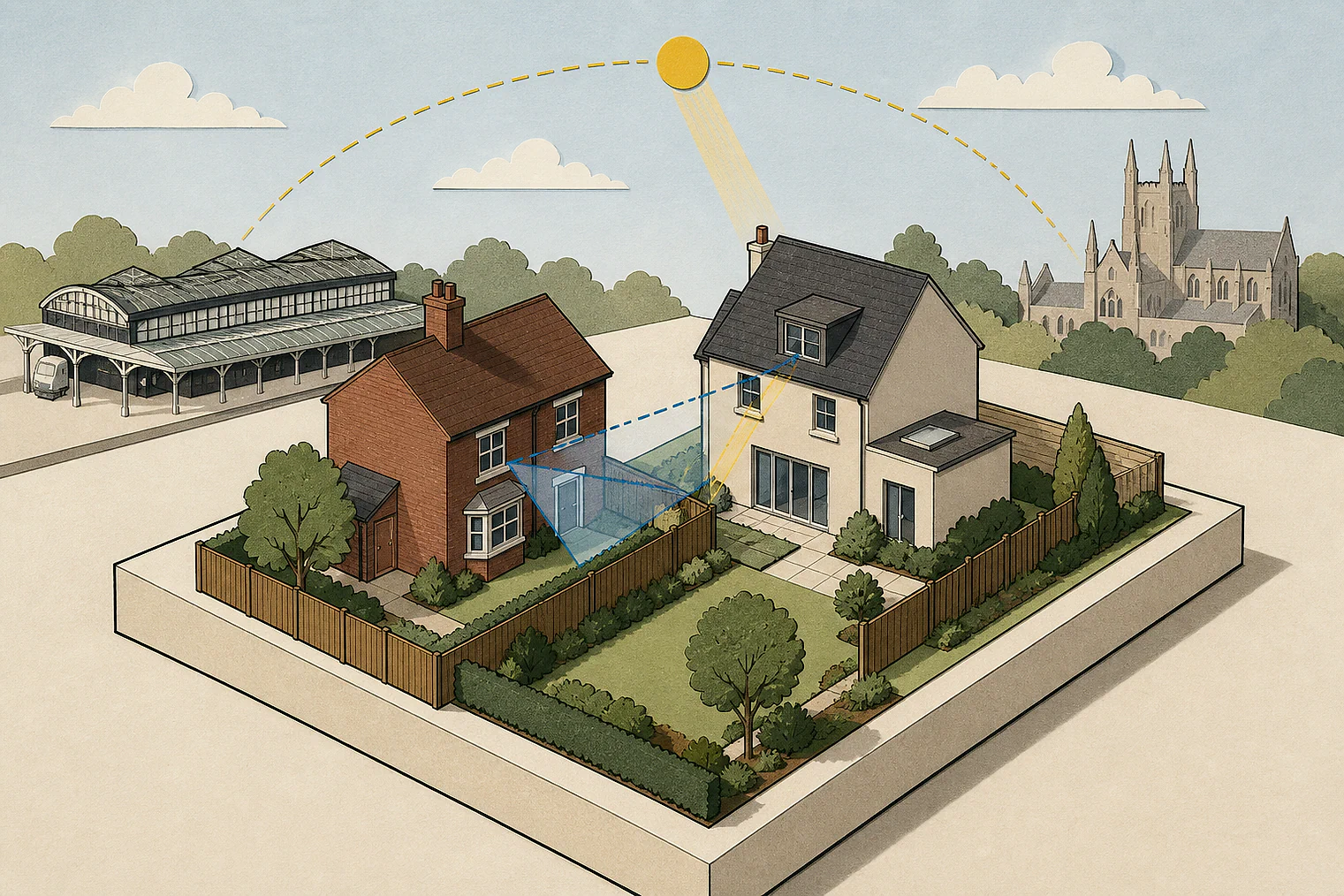
Planning Data area point: Winchester LPA (51.043581, −1.250401). This is the published representative point for the authority boundary, not a town hall, camera position or appeal site.
Winchester City Council appeal findings
Winchester outlook, HMO noise and occupancy
The selected examples omit a dismissed appeal from the matched local set, so their outcome mix differs. Some noise extracts give only conclusions.
Counted against appeals
Fence harm to adjoining outlook
Fence harmed adjacent outlook
The Inspector concluded that the retrospective courtyard fence harmed adjacent occupiers’ living conditions, with outlook the stated main issue.
Helped or needed
Evidence for HMO occupancy limits
No evidence for the four-person limit
The Inspector found no substantive evidence that extra bedrooms would cause significant additional noise, or that four occupants was the justified limit.
C4 use still controlled occupancy
The condition’s removal would not create an unrestricted HMO because the C4 use definition still controlled total occupants.
Your refusal notice
Check these details
- Does the refusal identify a harmful effect on outlook, noise or disturbance?
- Is there substantive evidence that the proposed change would create additional noise?
- If it sets an occupancy limit, does it explain why that limit is justified?
The examples span a fence, HMO occupancy and noise cases, so their facts may differ from your proposal. These decisions do not predict another result.
Appeal evidence examples
Compare allowed and dismissed appeal reasoning
Each example separates the development, the Inspector-stated issue that selected it, and the reasoning from the decision. Compare the facts as well as the outcome: these examples do not predict how a different proposal would be decided.
Allowed appeal examples
1 example
26 November 2021 · Allowed
Development described in the decision
described as ([name]) C3 use to Dual use C3 Residential / C4 (4 Bed) [name].
Issue identified by the Inspector
The main issue is the effect on the living conditions of neighbouring residents.
Paragraph 2 · Source page 1
Reasoning from the decision
In granting permission, it has been accepted that 4 occupants of the HMO would not result in harmful living conditions to the occupiers of neighbouring dwellings. For 6 occupants, the plans indicate that there would be more bedrooms alongside the adjoining walls of neighbouring dwellings. However, both schemes would include a bedroom and communal space along the neighbours’ wall. There is no substantive evidence that more bedrooms would cause significant additional noise and disturbance, why the line should be drawn at 4, or why adjoining bedrooms might be acceptable for the neighbouring first floor flat but not the ground floor one. The removal of the condition would not result in an unrestricted HMO, as the total number of occupants would still be controlled by the definition of the C4 use.
Paragraph 5 · Source pages 1, 2
Dismissed appeal examples
4 examples
16 January 2026 · Dismissed
Development described in the decision
described as “a two-storey Passivhaus dwelling that complements the architecture of the surrounding area in Curdridge”
Issue identified by the Inspector
The main issues are: • Whether the proposed dwelling would be in a suitable location having regard to the development plan policies concerned with new housing in the countryside including the effect of the proposal on the character and appearance of the site and its surroundings; • Whether the proposed development would preserve the setting of the [name] listed building known as Wollams; • The effect of the proposal on highway safety; • The effect of the proposal on biodiversity; • The effect of the development on trees proposed to be retained; and • The effect of the proposal on the living conditions of the occupiers of the neighbouring dwelling [address] with regard to noise.
Paragraph 5 · Source pages 1, 2
Reasoning from the decision
As the technical details, noise assessment and any required mitigation could be secured by conditions, the living conditions of the occupants of [address] would not be unacceptably harmed as a result of noise. The proposal would therefore comply with LPP2 policy DM20 which seeks to ensure that noise does not have an unacceptable impact on human health or quality of life.
Paragraph 42 · Source page 7
31 December 2025 · Dismissed
Development described in the decision
installation of 1no. [address] Hub unit and removal of associated BT payphone kiosk(s).
Issue identified by the Inspector
The main issues in respect of Appeal A are the effect of the proposal upon (a) the character and appearance of the area; (b) pedestrian safety; and (c) the living conditions of occupiers of neighbouring properties, having regard to noise.
Paragraph 6 · Source page 2
Reasoning from the decision
For these reasons, the proposed development would not cause unacceptable harm to the living conditions of occupiers of neighbouring properties, having regard to noise and anti-social behaviour. Consequently, the Appeal A proposal complies with Policies DM17 and DM20 of the LPP2, insofar as they require that development safeguards amenity by avoiding unacceptable noise or disturbance, while also being designed to minimise opportunities for crime and anti-social behaviour. Appeal Decision APP/L1765/Z/25/3371378 & Appeal 6000546
Paragraph 26 · Source pages 4, 5
29 December 2025 · Dismissed
Development described in the decision
installation of 1no. [address] Hub unit and removal of associated BT payphone kiosk(s).
Issue identified by the Inspector
The main issues in respect of Appeal A are the effect of the proposal upon (a) the character and appearance of the area; (b) pedestrian safety; and (c) the living conditions of occupiers of neighbouring properties, having regard to noise and anti-social behaviour.
Paragraph 6 · Source page 2
Reasoning from the decision
For these reasons, the proposed development would not cause unacceptable harm to the living conditions of occupiers of neighbouring properties, having regard to noise and anti-social behaviour. Consequently, the Appeal A proposal complies with Policies DM17 and DM20 of the LPP2, insofar as they require that development safeguards amenity by avoiding unacceptable noise or disturbance, while also being designed to minimise opportunities for crime and anti-social behaviour.
Paragraph 22 · Source page 4
22 October 2021 · Dismissed
Development described in the decision
retrospective application for works to courtyard garden.
Issue identified by the Inspector
The main issue is the effect on the living conditions of occupiers of neighbouring properties taking particular account of outlook.
Paragraph 3 · Source page 1
Reasoning from the decision
For the reasons set out above I conclude the fence has a harmful adverse effect on the living conditions of occupiers of adjacent [address] properties. Accordingly there is conflict with Policy DM17(vii) of the Winchester District Local Plan Part 2 Development Management and Site Allocations 2017 which seeks to ensure development does not have an adverse impact on adjoining land or property by reason of overlooking, overshadowing, or by being overbearing.
Paragraph 9 · Source page 2